

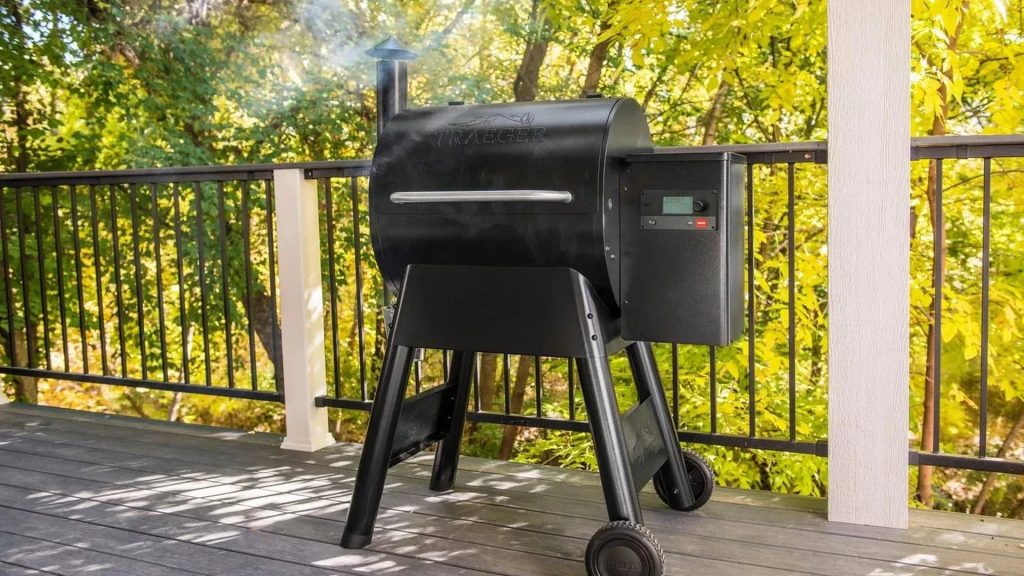
Traeger wood pellet grills combine the rich, smoky flavor of traditional offset charcoal smokers with the push-button ease of a modern convection oven. Instead of managing logs, balancing air vents, or checking coals every hour, a Traeger uses an automated, electric-powered system to feed 100% natural hardwood pellets into a firepot, maintaining exact temperatures automatically.
Here is a step-by-step breakdown of how the magic happens inside a Traeger.
"Set-It & Forget-It" Convenience
The Core System Components
Every Traeger grill relies on a few key internal parts working seamlessly together:
-
The Hopper: The side-mounted container where you load 100% natural hardwood pellets (such as Hickory, Apple, Cherry, or Mesquite).
-
The Auger: A motorized, rotating screw mechanism that transfers pellets from the hopper into the cooking barrel.
-
The Firepot: A small metal burner pot at the base of the grill where pellets are ignited and burned.
-
The Hot Rod (Igniter): An electric heating element at the bottom of the firepot that igniter the pellets during the startup sequence.
-
The Induction Fan: A variable-speed fan that feeds oxygen to the fire and circulates heat and smoke throughout the cooking chamber.
-
Drip Tray & Heat Baffle: Angled steel plates positioned above the firepot to prevent direct flame flare-ups, channel grease away safely, and ensure indirect convection heat.
-
Digital Controller (WiFIRE®): The system’s brain that monitors internal grill temperature via a probe and automatically regulates the auger speed and airflow.

True Wood-Fired Flavor
Step 1: Automated Fuel Delivery
When you turn on the Traeger and set your desired temperature (ranging anywhere from low-and-slow 75°C up to high-heat 260°C), the digital controller activates the auger motor. The auger slowly turns, drawing hardwood pellets out of the hopper and dropping them into the firepot.
Step 2: Electric Ignition
During the initial startup cycle, the electric hot rod in the firepot activates and glows red hot. Simultaneously, the induction fan turns on to blow oxygen over the hot rod. The heat and oxygen ignite the hardwood pellets within minutes. Once a steady flame is established, the hot rod automatically shuts off—the fire is now self-sustaining as long as fuel is supplied.
Step 3: Convection Heat & Pure Smoke
The induction fan continuously pushes air into the firepot, creating a clean-burning flame while circulating heat and natural hardwood smoke throughout the entire barrel. Because the solid steel heat baffle sits directly above the firepot, direct flames never reach your food. Instead, it creates true convection heat—cooking food evenly on all sides while infusing it with authentic wood flavor.
Step 4: Precise Smart Temperature Control
The built-in RTD temperature sensor constantly reads the internal barrel temperature and feeds that data to the controller:
-
If the temperature drops below your set point, the controller speeds up the auger to feed more pellets into the firepot and boosts fan speed.
-
If the temperature rises above your set point, the auger slows down to reduce fuel flow.
This automated feedback loop holds temperatures steady, eliminating flare-ups, cold spots, and the need to constantly monitor the grill.

Why the Traeger System Is So Effective
-
Indirect Cooking (No Flare-Ups): Grease drips onto the angled drip tray and drains safely into an external bucket rather than hitting open flames, preventing burnt food and bitter smoke.
-
Consistent Clean Smoke: By precisely balancing fuel and oxygen, Traegers burn wood pellets completely, producing thin, blue smoke that delivers optimal flavor without creosote buildup.
-
Convection Efficiency: Juices are sealed in naturally because hot, moist smoke circulates constantly around the meat, reducing the need for spritzing or flipping.
Explore The Traeger Range Online



- Advice
- traeger
- grill
- outdoor cooking
- pellet grill


